
CONTACT ELI SKLAR LOANS TODAY!
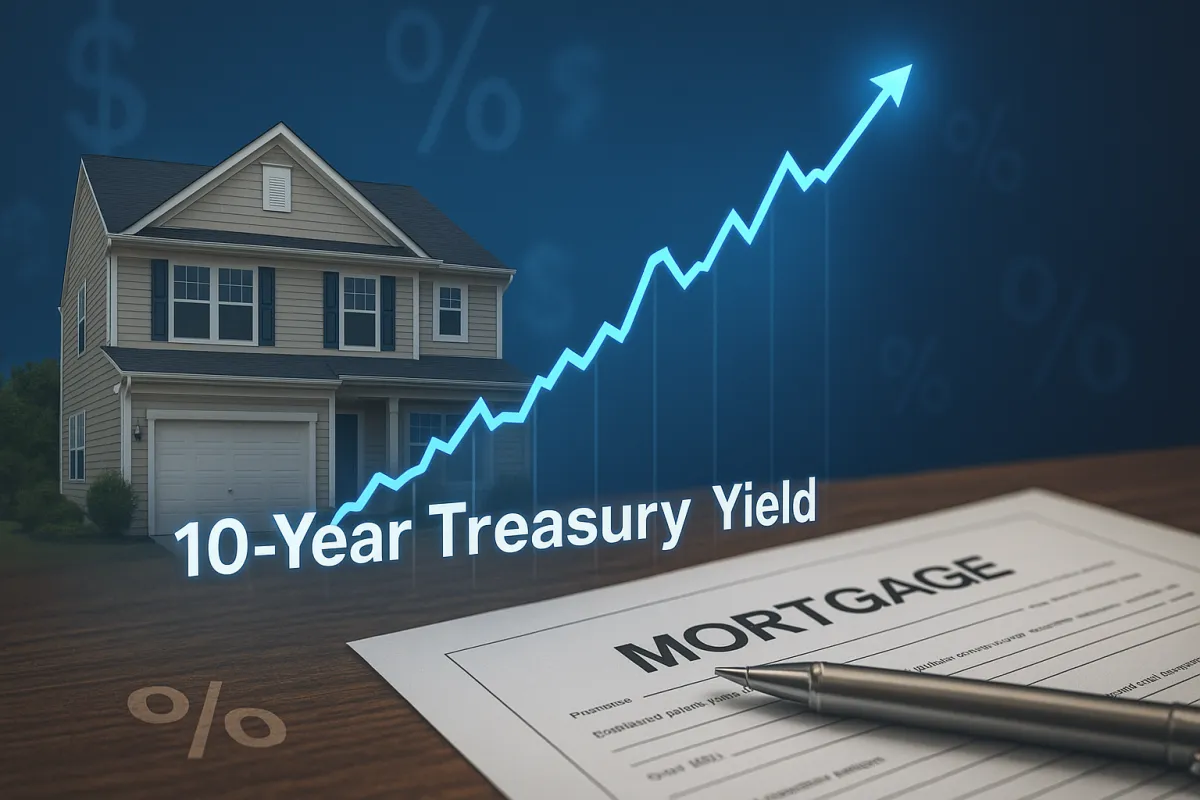
How Mortgage Rates Are Connected to the 10-Year Treasury Yield
How Mortgage Rates Are Connected to the 10-Year Treasury Yield
Mortgage rates fluctuate due to several economic factors, but one of the strongest indicators of where they are headed is the 10-year Treasury yield. Understanding the connection between these two financial metrics can help borrowers and investors make smarter decisions about home loans and refinancing.
What Is the 10-Year Treasury Yield?
The 10-year Treasury yield represents the return investors earn from holding a U.S. government bond for ten years. It is considered one of the safest investments since it is backed by the U.S. government. The yield is influenced by economic conditions, Federal Reserve policies, inflation expectations, and investor demand. Because it reflects broader economic confidence, movements in the 10-year Treasury yield can serve as an early indicator of changes in mortgage rates.
Why Mortgage Rates Follow the 10-Year Treasury Yield
Mortgage lenders use the 10-year Treasury yield as a benchmark when setting interest rates. Since Treasury bonds are a low-risk investment, mortgage lenders must offer higher returns to attract investors to mortgage-backed securities (MBS). Typically, mortgage rates are about 1.5% to 2% higher than the 10-year Treasury yield.
When Treasury yields rise, mortgage rates tend to follow suit. This is because higher yields indicate that investors expect strong economic growth and possibly higher inflation, which could lead to increased borrowing costs. Conversely, when Treasury yields decline, mortgage rates often decrease as well, making home loans more affordable for borrowers.
Recent Trends in the 10-Year Treasury Yield and Mortgage Rates
As of April 2, 2025, the 10-year Treasury yield stood at 4.20%, reflecting a slight increase from 4.17% on April 1, 2025. On the mortgage side, the average interest rate for a 30-year fixed-rate conforming mortgage loan in the U.S. was 6.568% on April 3, 2025. This represents a decrease from 6.632% on April 1, 2025. These figures illustrate the dynamic relationship between the 10-year Treasury yield and mortgage rates, as both are influenced by broader economic conditions and investor sentiment.
How the Federal Reserve Affects Treasury Yields and Mortgage Rates
The Federal Reserve plays a key role in shaping the movement of Treasury yields and mortgage rates. The Fed sets the federal funds rate, which influences short-term borrowing costs. Although the Fed does not directly control long-term rates, its policies on interest rates and bond purchases can impact Treasury yields and, in turn, mortgage rates.
For instance, if the Fed raises interest rates to combat inflation, Treasury yields may rise as investors anticipate tighter monetary policy. This can lead to higher mortgage rates. On the other hand, if the Fed signals a pause or a rate cut to stimulate economic growth, Treasury yields may drop, bringing mortgage rates down as well.
How Borrowers Can Use This Information
By tracking the 10-year Treasury yield, homebuyers can get a sense of where mortgage rates might be headed. If Treasury yields are rising, mortgage rates may increase soon. If yields are falling, it could signal a good time to secure a lower rate.
Tips for Homebuyers and Refinancers
Monitor Treasury Yield Trends: If you’re planning to buy a home or refinance your mortgage, keeping an eye on the 10-year Treasury yield can help you time your loan application for the best possible rate.
Consider Rate Locks: If rates are trending upward, locking in your mortgage rate sooner rather than later can help you avoid higher borrowing costs.
Stay Informed on Federal Reserve Decisions: The Fed’s actions influence Treasury yields and, by extension, mortgage rates. Follow Fed announcements and interest rate projections to anticipate changes in the market.
Work on Your Credit Score: Even if rates are rising, a higher credit score can qualify you for better loan terms, potentially offsetting some of the increases in interest rates.
Explore Loan Options: Different mortgage products have varying rates. Consider whether a fixed-rate or adjustable-rate mortgage (ARM) is best suited to your financial goals.
Final Thoughts
The 10-year Treasury yield is a crucial indicator of where mortgage rates may be headed. While external economic factors and Federal Reserve policy decisions also play a role, understanding the relationship between Treasury yields and mortgage rates can help borrowers make more informed decisions. Whether you are purchasing a new home or refinancing an existing loan, staying up to date with market trends can ultimately save you thousands of dollars in interest payments over the life of your mortgage.

SUCCESS STORIES FROM OUR CLIENTS
I can't thank Eli enough for his assistance in securing a loan for my commercial property. His expertise and attention to detail were remarkable. Eli not only helped me find the right lender but also negotiated favorable terms that fit my financial goals. He made the entire process seamless and stress-free, and I felt confident knowing I had an expert advocating for my best interests. He is a true professional, and I highly recommend his services to anyone seeking a commercial loan.

Mike Erman
Real Estate Agent
Eli is an exceptional loan expert who helped me secure a commercial loan for my business expansion. His deep knowledge of the lending industry and his strong relationships with lenders made the process smooth and efficient. Eli took the time to understand my specific needs and goals, and he went above and beyond to ensure I received the best terms and rates. Thanks to Eli's expertise and dedication, I was able to take my business to the next level. I highly recommend Eli!

Jake Flynn
Real Estate Agent
Working with Eli was a game-changer for me as a real estate investor. His expertise and his ability to identify the right financing options truly impressed me. Eli took the time to understand my investment strategy and found tailored loan solutions that aligned perfectly with my goals. His professionalism, responsiveness, and attention to detail made the entire process stress-free. I am grateful to have had Eli as my trusted partner, and I highly recommend him to anyone!

Jan Brooks
Real Estate Agent


Copyright© Eli Sklar Loans 2025. All Rights Reserved.
+1 (516) 902‑8593